
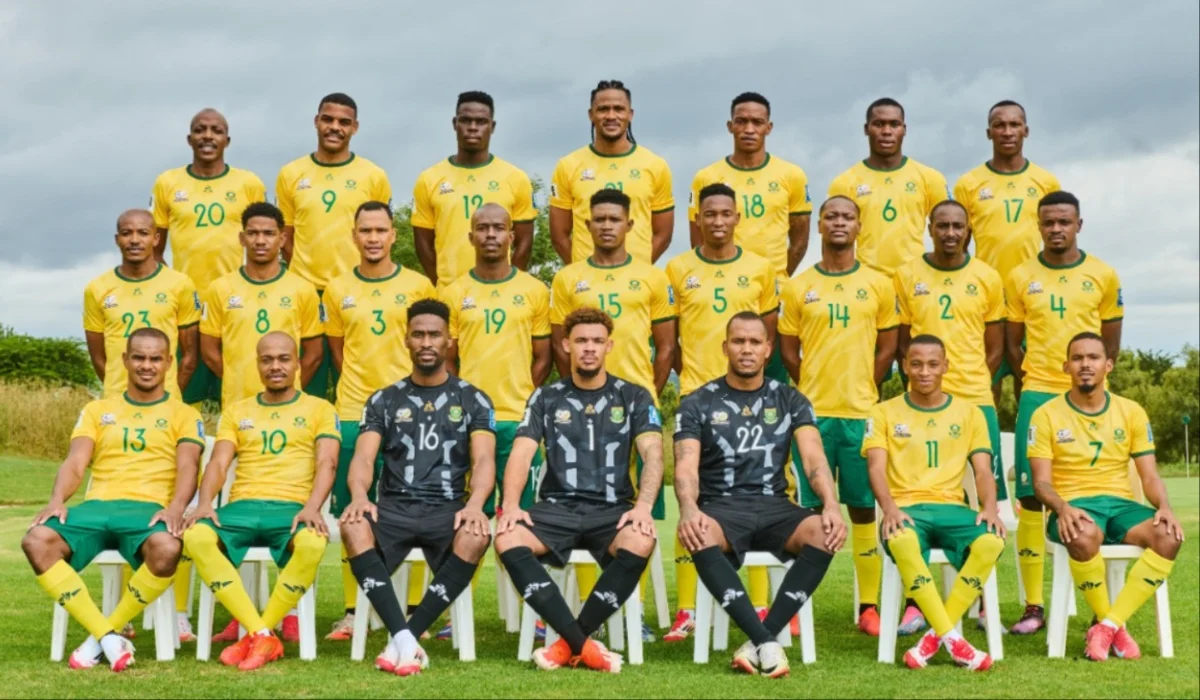
South African football is on the cusp of its biggest-ever payday. With Bafana Bafana already qualified for the 2026 FIFA World Cup, the national game is guaranteed a minimum of R175 million, with the potential for a historic windfall of up to R858 million depending on the team’s performance in the tournament.
The record-breaking financial blueprint was approved by the FIFA Council in Doha on 17 December 2025. A total of US$727 million (Approx. R12.1 billion) will be distributed to the 48 participating nations, marking a 50% increase from the previous tournament in Qatar. For the South African Football Association (SAFA), this means guaranteed revenue and the thrilling possibility of exponential rewards.
FIFA President Gianni Infantino stated the financial plan was “groundbreaking,” confirming the world governing body’s commitment to reinvesting in the global game.
The Financial Ladder: Every Step Has Its Price
The heart of the announcement is a detailed prize money structure. The largest share, US$655 million, is dedicated to performance-based rewards. According to the official FIFA release, the earnings ladder is as follows:
-
Champions: US$50 million (Approx. R833 million)
-
Runners-up: US$33 million (Approx. R550 million)
-
3rd Place: US$29 million (Approx. R483 million)
-
4th Place: US$27 million (Approx. R450 million)
-
5th-8th Place (Quarter-finalists): US$19 million each (Approx. R317 million)
-
9th-16th Place (Round of 16): US$15 million each (Approx. R250 million)
-
17th-32nd Place (Round of 32): US$11 million each (Approx. R183 million)
-
33rd-48th Place (Group Stage): US$9 million each (Approx. R150 million)
Crucially, each team also receives a flat fee of US$1.5 million (Approx. R25 million) from FIFA to cover preparation costs, which forms the base of all potential earnings.
Bafana Bafana’s Road To Riches: Seven Potential Scenarios
With South Africa’s place at the 2026 finals secured after the draw on 5 December 2025, the focus shifts from qualification to ambition. The nation’s final financial reward hinges on how far Bafana Bafana can progress.
1. The Guaranteed Foundation (R175 million)
By simply competing in the group stage and finishing between 33rd and 48th, Bafana Bafana secures the minimum package: US$9 million in prize money plus the US$1.5 million preparation fee, totalling a transformative US$10.5 million (Approx. R175 million) for SAFA.
2. Advancing to the Round of 32 (R208 million)
If Bafana Bafana progress from their group to the first knockout round, South Africa’s earnings rise to US$12.5 million (Approx. R208 million).
3. Reaching the Round of 16 (R275 million)
A place in the last 16 would be a major achievement and would see the prize money jump significantly to US$16.5 million (Approx. R275 million).
4. The Quarter-Final Dream (R342 million)
A run to the quarter-finals would be a financial game-changer, delivering a total of US$20.5 million (Approx. R342 million) for South African football development.
5. Chasing History: The Semi-Final Dream (R475m – R508m)
Here, Bafana Bafana would follow the iconic path of Morocco in 2022. Reaching the semi-finals would place South Africa among the global elite. A fourth-place finish would bring US$28.5 million (Approx. R475 million), while a third-place podium finish would be worth US$30.5 million (Approx. R508 million).
6. The Final Frontier (R575 million)
A fairytale run to the final itself would secure the runners-up prize, totalling US$34.5 million (Approx. R575 million) for the nation.
7. The Ultimate Fairytale: Lifting the Trophy (R858 million)
Should Bafana Bafana achieve sporting immortality and win the tournament, it would trigger the top prize and a historic windfall of US$51.5 million, or approximately R858 million.
This financial framework underscores the monumental stakes awaiting South Africa in 2026. The guaranteed funds provide a foundation, while the performance incentives offer a roadmap to potentially revolutionise the sport’s future across the nation.