
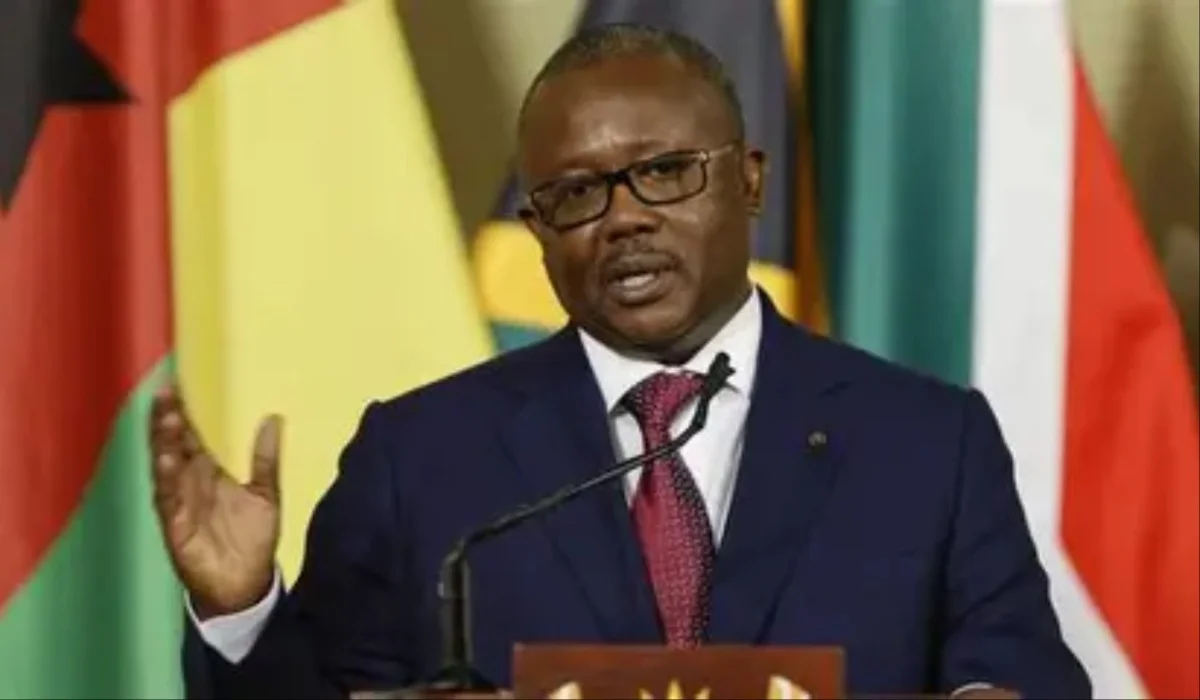
The political landscape of Guinea-Bissau has been plunged into fresh chaos following a dramatic military takeover that has seen the nation’s president, Umaro Sissoco Embaló, forcibly removed from power and evacuated to neighbouring Senegal. The swift and decisive coup has thrown the West African nation’s fragile democracy into disarray, prompting international alarm and halting a critical electoral process in its tracks.
The upheaval culminated on Thursday evening with President Embaló’s secure arrival in Senegal’s capital. The move was the result of high-stakes negotiations brokered by the Economic Community of West African States (ECOWAS), which intervened to secure the ousted leader’s safe passage out of the country. Confirming the development, Senegal’s foreign ministry stated: “President Umaro Sissoco Embaló has arrived in Dakar safe and sound aboard a specially chartered military aircraft.”
Guinea-Bissau President Flees To Senegal After Military Coup
With President Embaló deposed, the military junta has moved rapidly to consolidate its authority, installing a new transitional leader to steer the country. General Horta N’Tam was officially sworn into power, with the military announcing he will preside over the nation for a transitional period of one year.

ALSO READ: Vusimuzi Cat Matlala Denies Ties To Jerry Boshoga Drug Empire
The coup’s timing was particularly significant, striking just one day before the nation’s electoral commission was scheduled to announce provisional results from recent presidential and parliamentary polls. In a move that solidifies their control, the military has blocked all further electoral processes and the release of any results, effectively silencing the democratic voice of the people.
The military sought to justify its actions by alleging a sinister plot against the state. A military spokesman claimed the coup was a necessary measure to thwart a conspiracy by unnamed politicians. He asserted that these individuals were working “with the support of a well-known drug baron” to destabilise the nation. To enforce their new rule, the junta has imposed a strict night-time curfew and sealed the country’s borders, isolating Guinea-Bissau from the world.
A Familiar Pattern of Instability Evokes Global Concern
This latest seizure of power adds another troubled chapter to Guinea-Bissau’s long and painful history of political instability. Since gaining independence from Portugal in 1974, the country has been a hotspot for military interventions, witnessing at least nine successful coups or attempted power grabs over the past five decades. Furthermore, the nation has gained notoriety as a major hub for international drug trafficking, a factor that has often fuelled its internal conflicts and corrupted its political institutions.
ALSO READ: Cat Matlala Reveals That Bheki Cele Demanded A R1 Million Bribe
The international community has reacted with profound unease. United Nations Secretary-General Antonio Guterres voiced his deep apprehension regarding the unfolding crisis. He declared that he was “deeply concerned by the evolving situation in Guinea-Bissau,” and issued a firm demand for the “immediate and unconditional restoration of constitutional order.” As the nation enters another period of uncertain military rule, its citizens and the world watch on, waiting to see if the cycle of coup and crisis can ever be broken.